Ultrasound-Guided Biopsy in Colombia
Dr. Jorge Vives is a radiologist: he guides the needle watching it enter on the screen, not by feel. That lets the sample come from the exact spot that needs studying, even when the lesion is small or sits next to a vessel.
A biopsy is always done on your doctor’s referral, and the diagnosis comes from the pathology laboratory, not from the scan.
Radiologist
Specialist, Universidad de Cartagena
Since 2014
Dedicated to ultrasound and Doppler
Same day
Procedure report explained during the visit
Same-day procedure report
The pathology result follows the laboratory’s timeline
- ACR member
- CMAC Expert Committee
- International Speaker
- Degree recognized in Spain
- Radiologist + Aesthetic Physician
- WHAT THE STUDY IS
What is an ultrasound-guided biopsy?
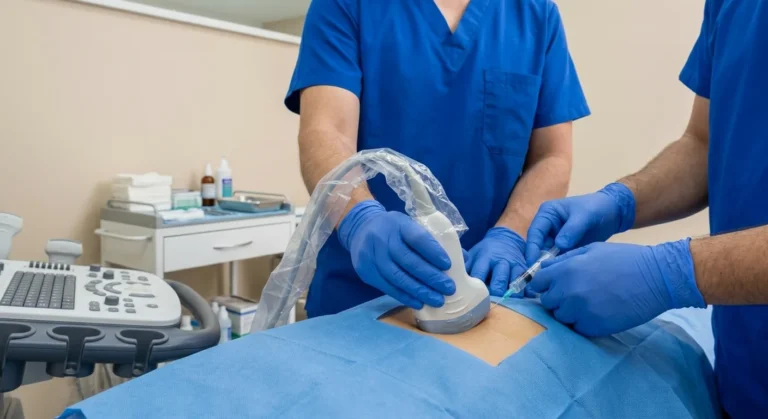
It means taking a tissue sample with a fine needle while the ultrasound shows, on screen and in real time, where the tip is. It is not surgery: local anesthetic, outpatient, and you walk out afterwards.
The difference from a blind biopsy is easy to picture. Without guidance, the needle goes where the lump can be felt. With ultrasound guidance, the doctor watches the needle advance and takes it to the exact point he wants to sample, avoiding the vessels along the path. In small lesions that is the difference between a usable sample and one that has to be repeated.
Both techniques are done here: FNA — fine needle aspiration, the most common one — and core biopsy, which uses a larger-gauge needle and takes a small cylinder of tissue instead of cells. Your referral says which one you are having.
- THE ESSENTIALS
Six things worth knowing beforehand
What patients usually want to know before they book.
Under local anesthetic
The area is numbed. No general anesthetic and no hospital stay.
Outpatient
In and out the same day, walking.
The needle is visible
On screen and in real time, while it advances.
20 to 30 minutes
Including the preparation and resting afterwards.
Tell us about blood thinners
It is the one thing that can change your date.
Dr. Vives performs it
He reviews the images and scans the area himself before sampling.
- WHEN IT IS RECOMMENDED
When is an ultrasound-guided biopsy indicated?
Always on your doctor’s referral, and almost always after an ultrasound found something that needs characterizing. Imaging describes; only the sample gives a diagnosis.
A thyroid nodule
When its TI-RADS level and its size call for a sample.
A finding in the breast
To study a nodule seen on ultrasound or mammography.
A lymph node that has not gone down
When it has been enlarged for a while or has changed.
A soft tissue mass
A lump whose appearance on imaging is not conclusive.
A collection that needs draining
It can be aspirated under the same guidance.
Follow-up of an earlier biopsy
When the previous result was not conclusive.
- HOW IT WORKS
Your visit, step by step
Outpatient, under local anesthetic, in a single visit.
Review and consent
Local anesthetic
The needle, seen on screen
The result explained
How it is guided
The needle is watched going in,
not guessed at
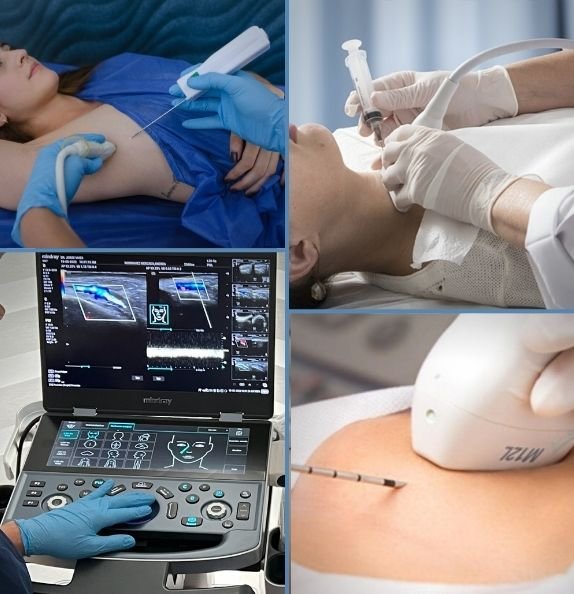
These are the targets that can be biopsied under ultrasound guidance in the office. In every case Dr. Vives watches the tip of the needle on screen as it advances.

The bright line is the needle going in. Seeing it is how the exact spot gets sampled.
What you leave the visit with
- The procedure report, with the area sampled and how it was done.
- The sample properly labeled and ready for the laboratory.
- The aftercare instructions for the hours that follow.
- Who to contact if anything does not go as expected.
Nodules that call for a sample because of their TI-RADS level and size.
Nodules seen on ultrasound or mammography, to characterize them.
When they have been enlarged for a while or have changed.
Masses and lumps whose appearance on imaging is not conclusive.
Fluid that can be drained in the same session as well as studied.
The biopsy takes the sample; pathology gives the diagnosis. We give you the procedure report the same day — what was sampled, from where and how — and the result of the study is issued by the laboratory on its own timeline. Every biopsy is performed on the referral of your treating physician.
- FROM ANOTHER COUNTRY
If you are traveling from outside Colombia
If you are coming from another country, leave margin when you plan it.
- Write to us before you travel with your referral: we will confirm whether the procedure can be done and what preparation it needs.
- The procedure report is issued the same day; the pathology result follows the laboratory’s timeline. Keep that in mind when planning your return.
- Tell us if you take blood thinners: it is the one thing that can force a change of date.
- Bring the ultrasound or mammogram on which the lesion was seen.
Where he practices
Three cities, one schedule
Permanent office
Cartagena
CC Bocagrande, Carrera 2 #8-142, floor 2, office 218.
Scheduled dates
Bogotá
In medical cowork spaces. The address is confirmed when you book.
Scheduled dates
Medellín
In medical cowork spaces. The address is confirmed when you book.
- ABOUT THE SPECIALIST
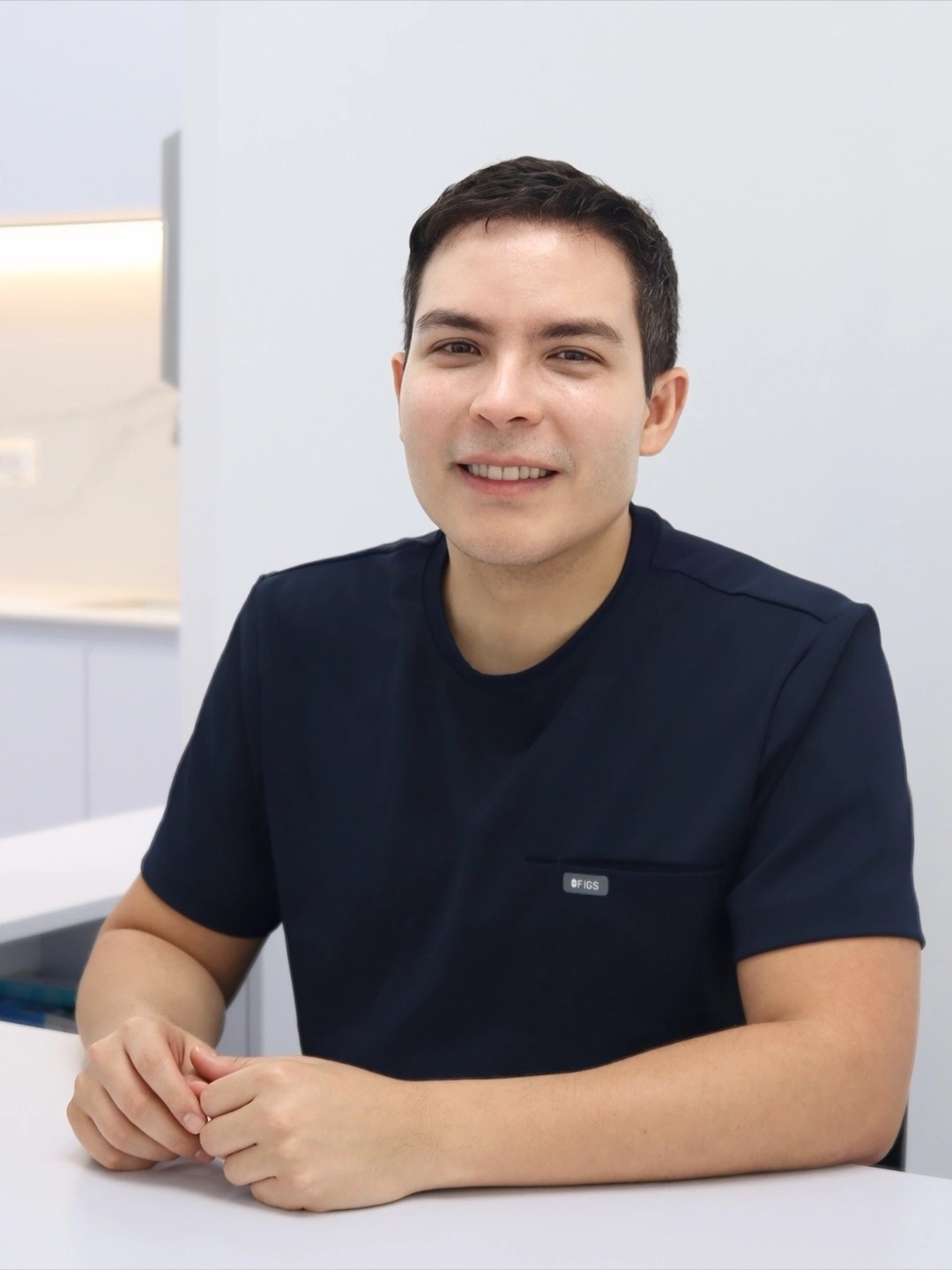
Dr. Jorge Vives Gutiérrez
- Universidad de Cartagena
- Degree recognized in Spain
- Speaker at international congresses
- Colombian board-certified radiologist — ACR member
- Member of the CMAC and AAAM expert committees
- International speaker for the Colombian Association of Radiology
- Pioneer of ultrasound-guided facial fillers in Colombia
- Faculty: Course on Ultrasound and Intervention in Facial Aesthetics
- BOOKING
Ask about your ultrasound-guided biopsy
Tell us what was indicated and for which area, and we will confirm the cost, the preparation and the available dates in Cartagena, Medellín or Bogotá.
- FREQUENTLY ASKED QUESTIONS
Frequently asked questions about ultrasound-guided biopsy
What patients ask most before their study.
How much does a private biopsy cost?
It depends on the area, on the type of needle your doctor indicated, and on whether the pathology study is included. Send us your referral through the form on this page and we will confirm the full cost and the payment options, with no surprises at the end.
Does it hurt?
You feel the sting of the anesthetic; after that the area is numb and what you notice is pressure rather than pain. How much you feel varies from person to person, and Dr. Vives tells you what is coming before each step.
My referral says FNA. Is this it?
Yes. FNA is fine needle aspiration, the usual version for the thyroid and for lymph nodes; core biopsy is the other technique described above. Bring the referral: it says which one was indicated.
Do I have to stop any medication?
Do not stop any medication on your own. Blood thinners and antiplatelet drugs may need adjusting, and that is decided between the doctor who prescribed them and Dr. Vives, who will perform the procedure — never by you and never by us alone. Tell us when you book if you take any: it is the one thing that can move your date.
When do I get the result?
The sample is studied by a pathology laboratory, and the laboratory sets the timeline. What you get the same day is the procedure report, which travels with the sample.
What are the risks, and are there contraindications?
This is a procedure with a needle, so unlike a plain scan it does carry some risk. The usual ones are bruising, tenderness for a day or two and a small amount of bleeding at the puncture site; infection is uncommon. Depending on the area, structures next to the target can be affected, and for a lesion deep in the chest wall or near the lung that includes a small risk of air escaping into the chest. A sample can also come back inconclusive and need repeating.
Tell us before you book if you take blood thinners or antiplatelet drugs, have a bleeding disorder, or have an infection or broken skin over the area. Dr. Vives goes through all of this with you, and you sign an informed consent, before anything is done.
Does the ultrasound give the result? Do I need a referral?
No. The ultrasound guides the needle and describes the lesion, but the diagnosis is established by the study of the sample: they are two different things and it is worth being clear about it from the start. A biopsy is always done on a doctor’s referral — bring it, because it states the area and the type of needle.