
Abdominal Wall and Hernia Ultrasound in Colombia
Dr. Jorge Vives is a radiologist: he studies the wall of your abdomen while it moves, asking you to bear down, because many hernias only appear when you strain. You leave with the result explained and with the exact measurement of the defect, which your surgeon works from.
Radiologist
Specialist, Universidad de Cartagena
Since 2014
Dedicated to ultrasound and Doppler
Same day
Report explained during the visit
Same-day report
Explained to you in the same visit
- ACR member
- CMAC Expert Committee
- International Speaker
- Degree recognized in Spain
- Radiologist + Aesthetic Physician
- WHAT THE STUDY IS
What is an abdominal wall ultrasound?
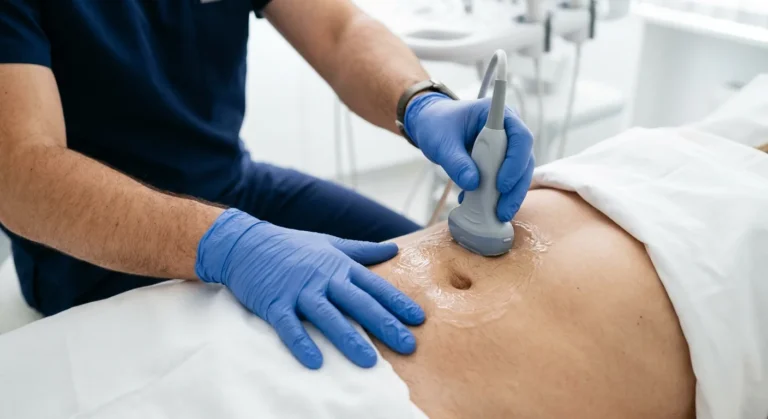
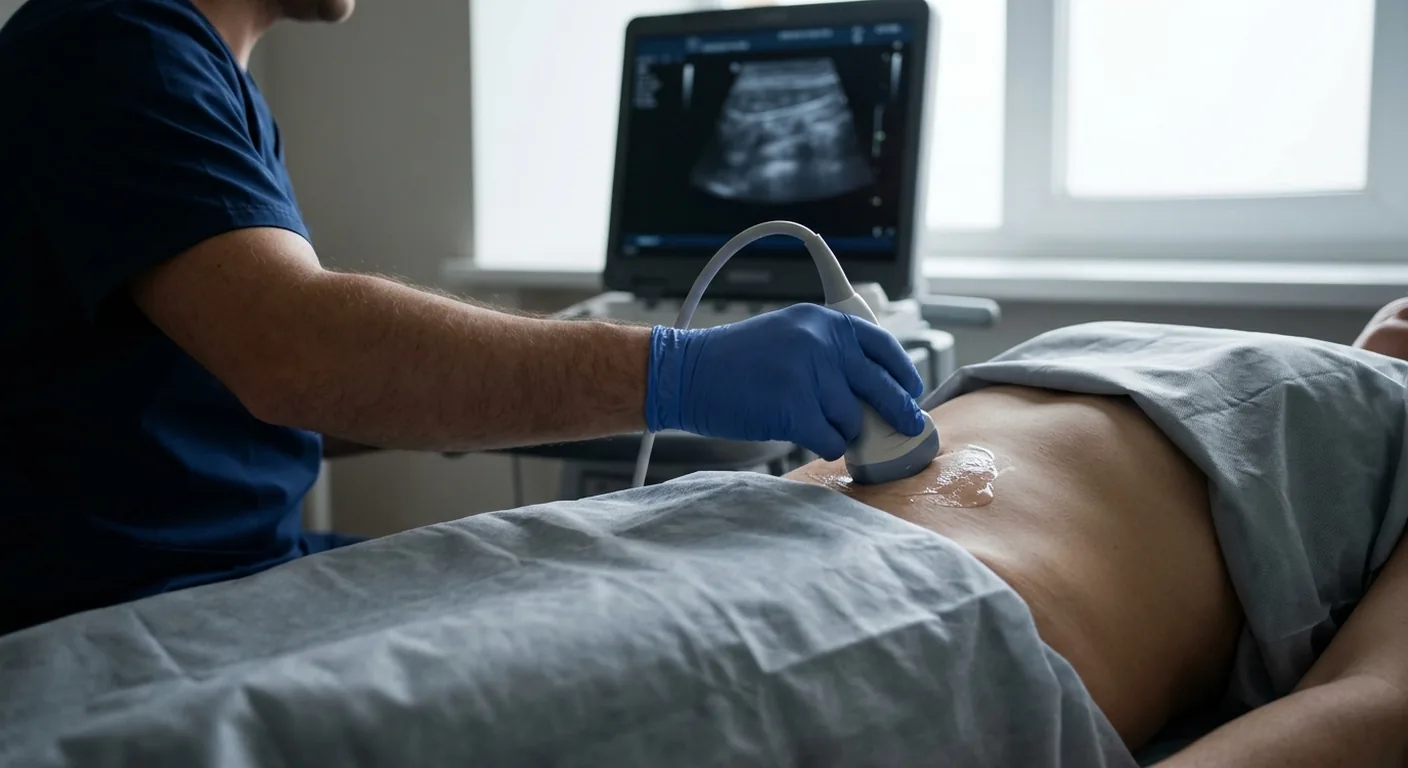
It is an ultrasound study of the layers of the abdominal wall: the skin, the fat, the fascia that holds it together and the muscles. It shows hernias, separations of the muscles, lumps and collections. It uses no radiation, needs no needles and does not hurt.
What sets it apart from other imaging is that it is done while you move. Dr. Vives asks you to bear down or lift your head while you lie on the table, and that is when what stays hidden at rest appears: a small hernia that slips out and back, or a defect that only opens under effort.
So the report does not just say “there is a hernia”. It says how wide the defect is, what is inside it, and whether the contents go back on their own. Your surgeon weighs those three things alongside your symptoms.
- THE ESSENTIALS
Six things worth knowing beforehand
What patients usually want to know before they book.
Studied while it moves
You are asked to bear down: that is when a hernia hidden at rest appears.
No preparation
No fasting and no medication to stop.
15 to 20 minutes
In and out in a single visit.
No radiation
It is ultrasound: no X-rays and no contrast agent.
The defect is measured
Its exact size in centimeters, which your surgeon asks for.
Dr. Vives reads it
The same radiologist who takes the images writes the report.
- WHEN IT IS RECOMMENDED
When is an abdominal wall ultrasound recommended?
Almost always for a bulge that comes and goes, for discomfort when you strain, or before and after surgery.
A bulge that comes and goes
It appears when you cough, strain or lift, and disappears when you lie down.
Discomfort when you strain
At the navel, the groin or over a scar.
After an operation
To see whether a defect has opened in the scar.
Separation of the muscles
The diastasis that follows pregnancy or a large change in weight.
Before surgery
Your surgeon needs the size of the defect to plan the repair.
A lump that does not move
To tell a hernia from a lipoma or a collection.
- HOW IT WORKS
Your visit, step by step
One visit, with no preparation. And one part that you do yourself.
You point to the spot
Examined at rest
You are asked to bear down
The result explained
What is looked for
What shows when you strain,
and not at rest
These are the five things the study tells apart in the abdominal wall. Whether they show at all usually comes down to being asked to strain.
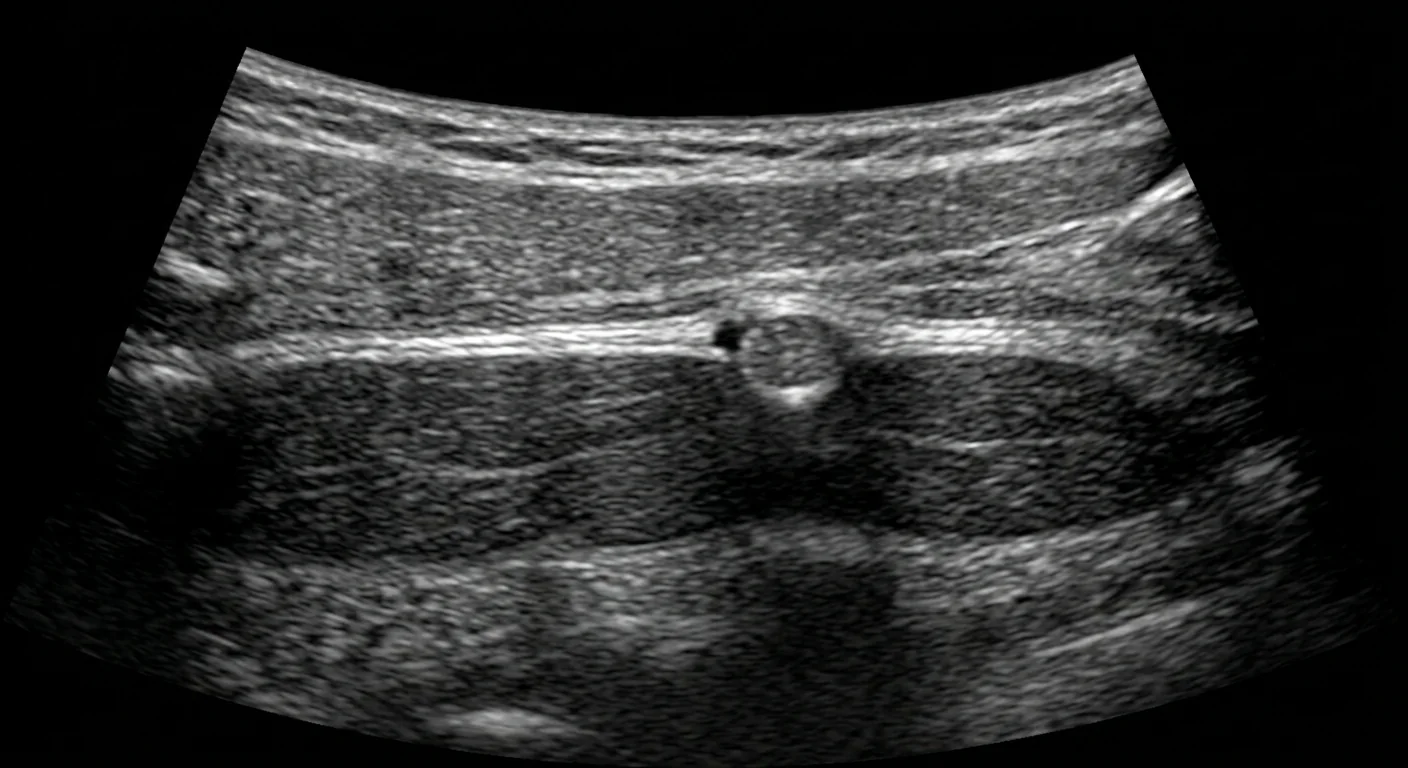
The layers of the abdominal wall. The study looks for a defect between them and for what pushes through it.
What you leave the visit with
- The size of the defect in centimeters, which your surgeon asks for.
- What it contains, and whether it goes back when you relax.
- A written report in digital format, ready for your physician or your surgeon.
- If what is there no a hernia, then what it is.
The most common one. It pushes out at the navel when you cough or strain and usually goes back on its own.
It appears over the scar of a previous operation, where the wall was left weaker.
In the groin. It is studied at rest and while you bear down, because it changes with effort.
A separation of the muscles, with no hole. It is measured in centimeters, section by section.
A lump that is no a hernia. Telling it apart changes what happens next entirely.
An ultrasound describes, it does not decide. It measures the defect, says what it contains and whether the contents go back. Whether to operate, and how, is decided by your surgeon, who also weighs your symptoms.
- FROM ANOTHER COUNTRY
If you are traveling from outside Colombia
You can book before you travel and get the whole study done in one appointment.
- Book from abroad through the form on this page, with no intermediaries.
- Your report the same day, so you do not need a second trip.
- Bring any previous ultrasound or CT of the area, and the surgical report if you have been operated on before: comparing is the only way to show whether the defect has grown.
Where he practices
Three cities, one schedule
Permanent office
Cartagena
CC Bocagrande, Carrera 2 #8-142, floor 2, office 218.
Scheduled dates
Bogotá
In medical cowork spaces. The address is confirmed when you book.
Scheduled dates
Medellín
In medical cowork spaces. The address is confirmed when you book.
- ABOUT THE SPECIALIST
Dr. Jorge Vives Gutiérrez
- Universidad de Cartagena
- Degree recognized in Spain
- Speaker at international congresses
- Colombian board-certified radiologist — ACR member
- Member of the CMAC and AAAM expert committees
- International speaker for the Colombian Association of Radiology
- Pioneer of ultrasound-guided facial fillers in Colombia
- Faculty: Course on Ultrasound and Intervention in Facial Aesthetics
- BOOKING
Book your abdominal wall ultrasound
Tell us where the bulge appears and how long it has been there, and we will confirm the available dates in Cartagena, Medellín or Bogotá.
- FREQUENTLY ASKED QUESTIONS
Frequently asked questions about abdominal wall ultrasound
What patients ask most before their study.
How much does the study cost?
It depends on how many areas need to be studied and on whether Doppler is needed. Tell us through the form on this page where the bulge is and we will confirm the cost and the payment options.
Do I need any preparation?
No. This study needs no fasting and no medication to stop. Wear something comfortable that lets the abdomen be uncovered.
Why am I asked to bear down?
Because many hernias only appear under effort. At rest the defect is closed and nothing shows; when you strain, the contents push through and can be measured. A study taken in one fixed position can miss that, which is why this examination has to be done by someone who knows how to look for it.
Is it valid if my referral says "soft tissue of the abdominal wall and pelvis"?
Yes, it is this same study with a wider field. That version does need preparation: come with a full bladder, because an empty bladder blocks the view of the pelvis.
What is diastasis recti?
It is the separation of the two straight abdominal muscles, common after pregnancy or a large change in weight. It is not a hernia: there is no hole, but a band of tissue that has stretched. The ultrasound measures how many centimeters apart they are, and at which point.
Does the ultrasound say whether I need surgery?
No. It describes the defect, measures it and says what it contains. The decision to operate belongs to your surgeon, who also weighs your symptoms and your case as a whole.
What are the risks, and can I use my referral?
There are no known risks from the scan itself: sound waves, no radiation, nothing injected, and it is not contraindicated in pregnancy. Tell us when you book if you have an open wound or a fresh surgical scar over the area, since the probe has to touch the skin. And yes: a referral for an abdominal wall, soft tissue or hernia ultrasound is valid here — bring it, because it says what your doctor was looking for.