
Dr. Jorge Vives, medico radiologo y medico estetico en Cartagena
Diagnostic study · Cartagena, Medellín and Bogotá

Leg Venous Doppler Ultrasound in Colombia

Dr. Jorge Vives is a radiologist: he studies the veins of your legs with maneuvers — compressing the calf and asking you to bear down — because reflux has to be provoked to be seen. You leave knowing what the scan showed, whether there is insufficiency and which veins it comes from.

If a leg has suddenly become swollen, painful, warm or red, do not book: be seen today. That can be a deep vein thrombosis. And if you are short of breath, your chest hurts, you are coughing up blood, your heartbeat is fast or irregular, or you feel dizzy or faint, call emergency services.

Radiologist

Specialist, Universidad de Cartagena

Since 2014

Dedicated to ultrasound and Doppler

Same day

Report explained during the visit

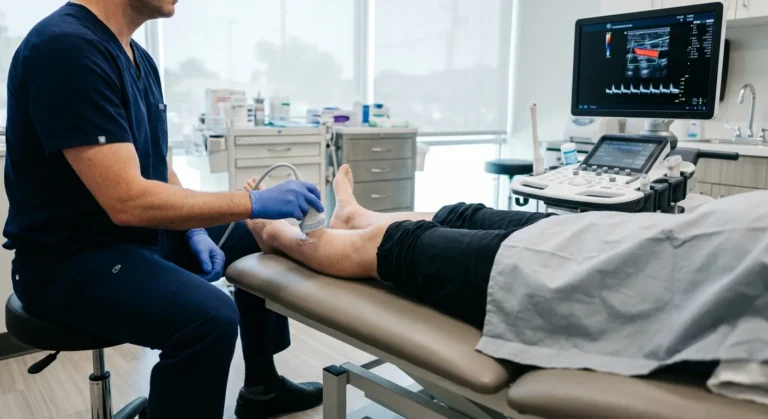
Leg venous Doppler with the patient lying down, color flow shown on the monitor

Same-day report

Explained to you in the same visit

  • ACR member
  • CMAC Expert Committee
  • International Speaker
  • Degree recognized in Spain
  • Radiologist + Aesthetic Physician

What is a leg venous Doppler?

It is an ultrasound study that looks at two things at once: how the veins of your legs appear and how the blood moves inside them. That second part is the Doppler, and it turns an image into a functional test.

It answers two different questions, and they should not be mixed up. The first is whether a clot is blocking a vein, which is the urgent one. The second is whether the valves close properly or let blood fall back, which is behind varicose veins, heavy legs at the end of the day and swelling.

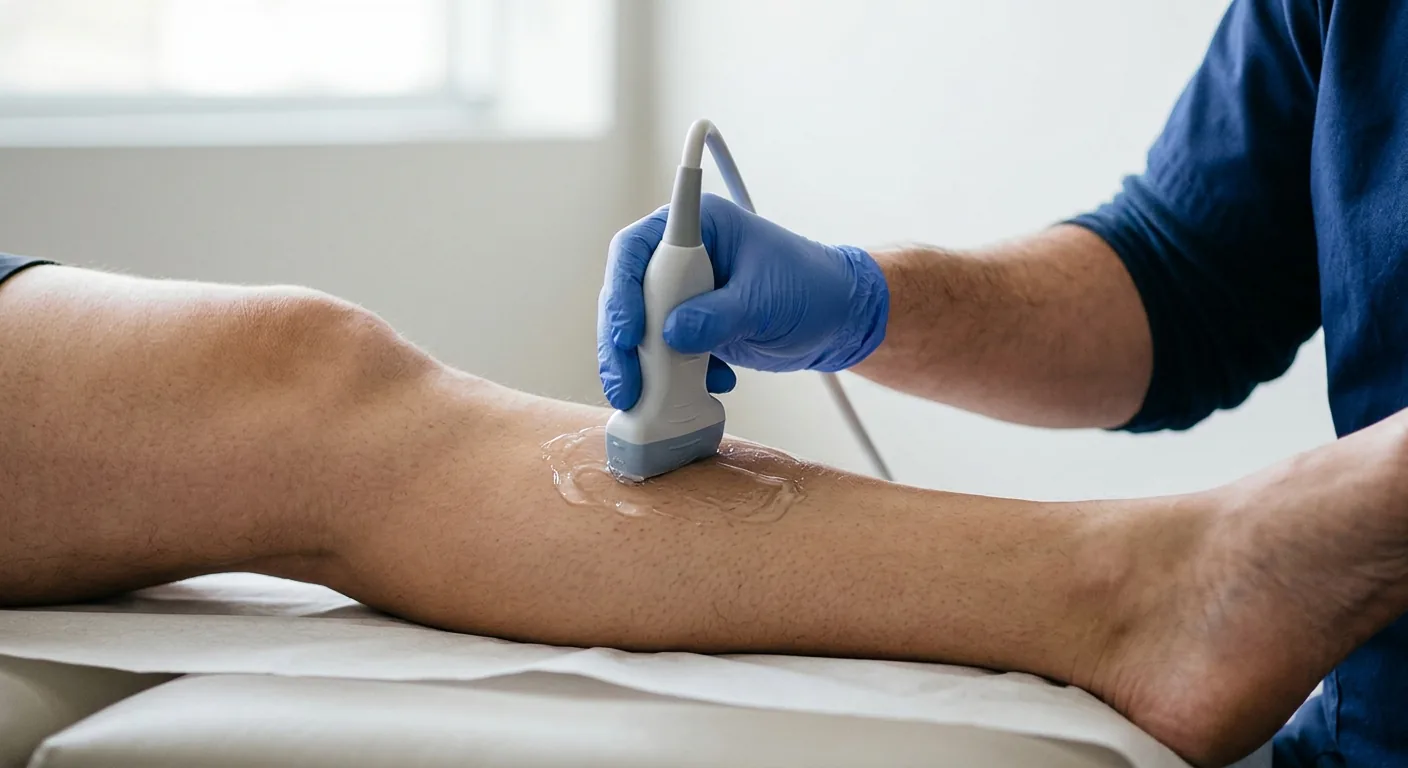
You stay on the examination table throughout. What makes the reflux visible is not a change of posture but the maneuvers: Dr. Vives compresses the calf and releases it, or asks you to bear down, and watches whether the blood falls back and for how many seconds. Without provoking it, a reflux can go completely unnoticed.

Probe on the calf during a leg venous Doppler

Six things worth knowing beforehand

What patients usually want to know before they book.

Provoked with maneuvers

Reflux is not visible at rest: it has to be provoked to be measured.

No preparation

No fasting and no medication to stop.

30 to 45 minutes

Two legs, several territories and maneuvers.

With maneuvers

The calf is compressed and you bear down: that provokes the reflux.

Reflux is measured

In seconds, which is how insufficiency is graded.

Dr. Vives reads it

The same radiologist who takes the images writes the report.

When is a leg venous Doppler recommended?

There are two very different reasons: a suspected thrombosis, which is urgent, and the study of varicose veins and heavy legs, which is planned.

Suspected thrombosis

A leg recently swollen, painful or warm. Be seen the same day, not booked.

Visible varicose veins

To find which vein they come from before treating them.

Heavy legs at the end of the day

Tired legs that feel better when you raise them.

Swollen ankles

Above all when it is only one leg.

Skin changes

Dark patches or hardening near the ankle.

Before varicose vein surgery

Your surgeon needs the map of which vein is failing.

Your visit, step by step

Two positions, two legs and several maneuvers. No preparation beforehand.

1

Lying down, first

The deep veins are followed from the groin to the calf, compressing with the probe. A healthy vein flattens under pressure; one with a clot does not. That is how a thrombosis is looked for.
2

The superficial veins

The superficial veins are then checked, which is where most varicose veins begin, with the leg positioned so that the blood column loads the valves.
3

The maneuvers

The calf is compressed and released, or you are asked to bear down. If the valves do not close, the blood falls back and the seconds it lasts are measured.
4

The result explained

The images are read on the spot. You leave with the map of which veins are failing and with your written report.

What is looked for

Two different questions,
one study

A venous Doppler answers two things that should not be mixed up: whether there is a clot, which is the urgent one, and whether the valves are failing, which lies behind varicose veins and heavy legs.
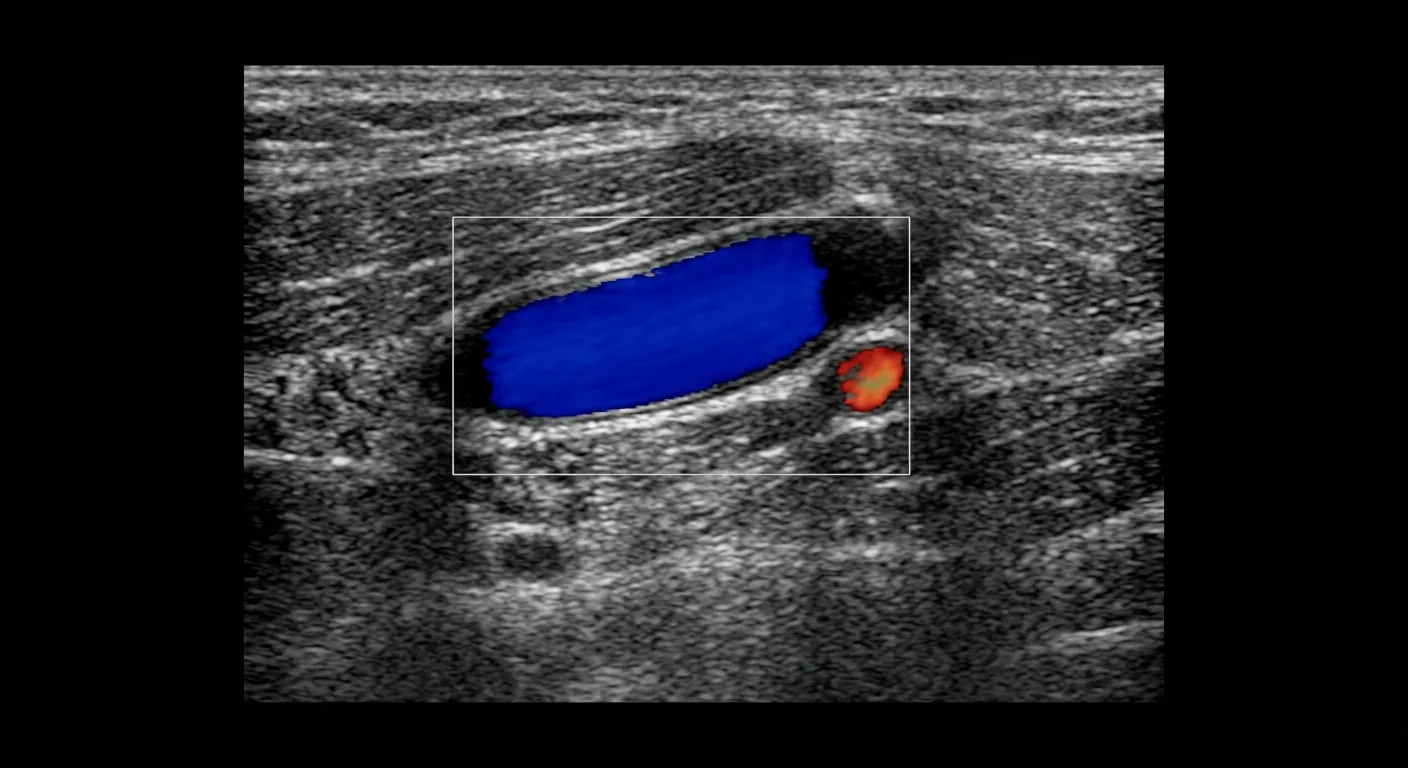
Doppler study of a leg vein, with blood flow shown in color inside the vessel

Color shows the blood moving inside the vein, and whether it flows on or falls back.

What you leave the visit with

  • Whether or not there is a thrombosis, which is the urgent question.
  • The map of which veins have reflux and how many seconds it lasts.
  • A written report in digital format, ready for your physician or your vascular surgeon.
  • The next step, explained with the image in front of you.
Thrombosis

A clot blocking a deep vein. This is the urgent one and the vein does not flatten under pressure.

Venous insufficiency

The valves do not close and blood falls back. It is graded in seconds of reflux.

Where varicose veins start

Which vein they come from. This is the map the surgeon needs.

Superficial thrombosis

In a vein near the surface. Less serious, but it changes the follow-up.

Baker's cyst

Behind the knee. It can cause symptoms like a thrombosis, so telling them apart matters.

If a thrombosis is suspected, do not leave it until tomorrow. A leg that has recently become swollen, painful or warm is seen the same day: time changes what is done. And a scan that finds no clot does not always close the question — with high clinical suspicion your doctor may repeat it. An ultrasound describes what is there; treatment is decided by your treating physician.

If you are traveling from outside Colombia

You can book before you travel and get the whole study done in one appointment.

  • Book from abroad through the form on this page, with no intermediaries.
  • Your report the same day, so you do not need a second trip.
  • If you have just taken a long flight and one leg is swollen or painful, do not leave it until the end of the trip: be seen the same day, where you are.
  • Bring any previous Doppler: comparing is the only way to show whether the insufficiency has progressed.

Where he practices

Three cities, one schedule

Permanent office

Cartagena

CC Bocagrande, Carrera 2 #8-142, floor 2, office 218.

Scheduled dates

Bogotá

In medical cowork spaces. The address is confirmed when you book.

Scheduled dates

Medellín

In medical cowork spaces. The address is confirmed when you book.

Dr. Jorge Vives, radiologist and aesthetic physician, Cartagena

Dr. Jorge Vives Gutiérrez

Dr. Jorge Vives is a radiologist, a specialist from the Universidad de Cartagena with his degree recognized in Spain. He has worked with ultrasound, Doppler and ultrasound-guided procedures since 2014.

Book your leg venous Doppler

Tell us what is going on and whether you have a referral, and we will confirm the available dates in Cartagena, Medellín or Bogotá.

Dr. Jorge Vives office at Bocagrande Shopping Center, Cra. 2 #8-142, 2nd floor, Office 218, Cartagena, Colombia
ULTRASOUND (EN)

Frequently asked questions about leg venous Doppler

What patients ask most before their study.

How much does a leg venous Doppler cost?

It depends on whether one leg or both are studied, and on whether the arterial system is included. Send us your referral through the form on this page and we will confirm the cost and the payment options.

No. No fasting and no medication to stop. Wear something comfortable that lets the legs be uncovered completely, and skip compression stockings that day if you can.

Yes, it is the same study. It may also appear as “Doppler ultrasound of the venous vessels of the lower limbs” or “venous duplex”. Bring it: it says what your doctor was looking for.

You do not have to. The study is done on the examination table, and what makes a leaking valve show is the maneuver — compressing the calf or asking you to bear down — not standing up. Without those maneuvers a real reflux can be reported as normal.

No. The only thing you feel is the pressure of the probe when it compresses, which is part of the examination. If an area is very sore, say so: it is studied more gently.

It is one of its two main jobs and the test of choice for it. As explained above, a normal scan does not always settle it, and your doctor may repeat it. And if the suspicion is of a thrombosis right now, do not book: be seen the same day, because time changes what is done.

It gives the map your surgeon needs: which veins have reflux, where it starts and how long it lasts. The decision to operate, and with which technique, is theirs and not the image’s. There are no known risks from the scan itself, and it is not contraindicated in pregnancy.