
Filler Correction & Dissolving in Colombia
If a filler result went wrong (lumps, asymmetry, migrated product, a bluish tint), the first step is not more product. It is a diagnosis. With high-frequency ultrasound I can see exactly where the filler sits, what type it is and whether it can be dissolved safely. I correct with an image, not a guess. Patients travel from abroad for this assessment, and I see them in Cartagena, Bogotá and Medellín.
+ aesthetic physician
Colombian Society of Radiology
hyaluronidase under ultrasound
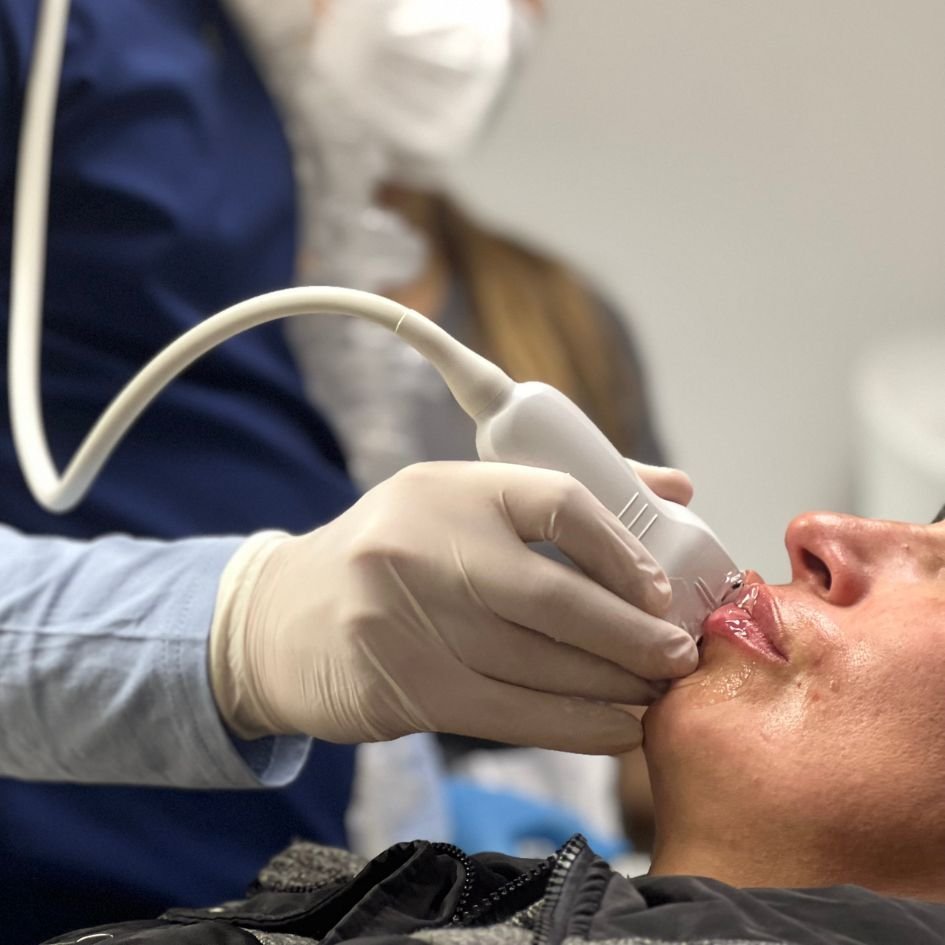
Real-time ultrasound guidance
- Colombian Society of Radiology
- CMAC Expert Committee
- International Speaker
- Degree Validated in Spain
- Radiologist + Aesthetic Physician
- WHEN FILLER GOES WRONG
When a filler result goes wrong, the fix starts with an image
Hyaluronic acid fillers are safe when they are placed correctly. In inexperienced hands, the same product can end up in the wrong tissue plane, migrate away from the injection point, or form lumps you can see and feel. The answer is not more filler on top. It starts with knowing exactly what is under your skin: where the product sits, how much is left and what condition the tissue is in. Only then is it possible to decide between dissolving, correcting or monitoring.
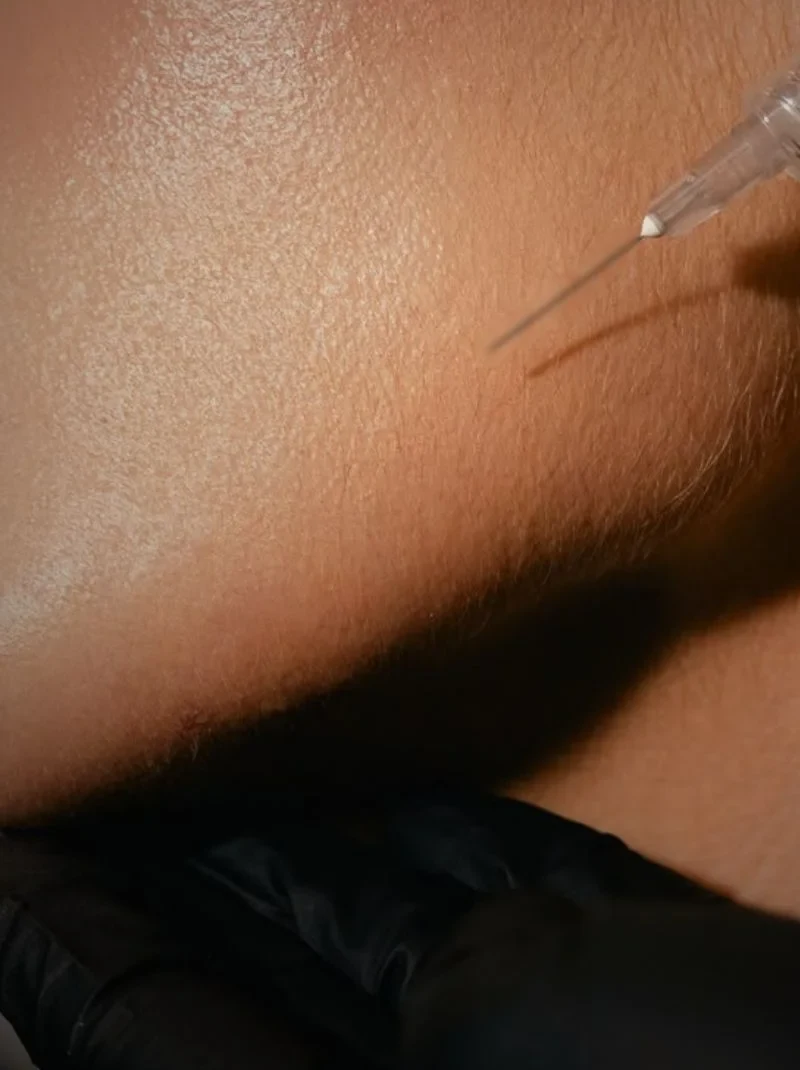
- WARNING SIGNS
Does something feel wrong after your filler?
If you notice any of these signs after a facial filler, have the area assessed before doing anything else. Most of them can be corrected once the product is located.
Facial asymmetry
The result looks uneven or out of proportion from one side of the face to the other.
Palpable nodules
Lumps or irregularities you can feel under the skin. Some are visible, others only to the touch.
Tyndall effect
A bluish or grayish tint under the skin, caused by filler placed too close to the surface.
Product migration
The filler has moved away from where it was injected. In lips it often shows as a shadow above the lip line, sometimes called a filler mustache.
Persistent pain or swelling
Pain, redness or swelling in the treated area that does not settle with time.
Urgent: vascular compromise
Skin that turns pale, blotchy or dusky, severe pain, or any change in your vision. This needs immediate medical attention.
- ULTRASOUND DIAGNOSIS
How ultrasound changes a correction
Palpation can find a lump. It cannot say what the lump is, how deep it sits or which vessel runs next to it. High-frequency ultrasound can. Correcting with that image is a different procedure from correcting blind.
Exact product location
Ultrasound shows exactly where the filler is deposited, in which tissue plane and how it relates to nearby structures.
Filler type identified
Each filler material (hyaluronic acid, calcium hydroxylapatite, PMMA) has a distinct ultrasound signature, so it can be identified without guesswork.
Tissue planes assessed
The scan shows whether the product sits in the correct plane or has migrated somewhere it should not be.
Vascular flow checked
Color Doppler evaluates blood flow to detect a compressed or blocked vessel, critical when a vascular occlusion is suspected.
Guided hyaluronidase injection
The enzyme goes directly into the filler deposit, not where it is believed to be. More effective with less product.
Dissolving confirmed
A follow-up scan confirms the product has dissolved and the tissue is recovering as it should.
- STEP BY STEP
How I perform a filler correction, step by step
A protocol built on precise ultrasound diagnosis, not assumptions.
Consultation and ultrasound assessment
A complete scan of the area to locate the filler, identify its type, check the tissue planes and map the vessels around it.
Personalized correction plan
Based on the diagnosis, the plan defines how much hyaluronidase is needed, the exact injection points and whether one session will be enough.
Ultrasound-guided dissolving
Hyaluronidase is injected directly into the filler deposit while the screen shows the product breaking down in real time.
Follow-up imaging
A control scan verifies the product has dissolved and the tissue is recovering. Reviews continue until the result is stable.
- ABOUT THE SPECIALIST
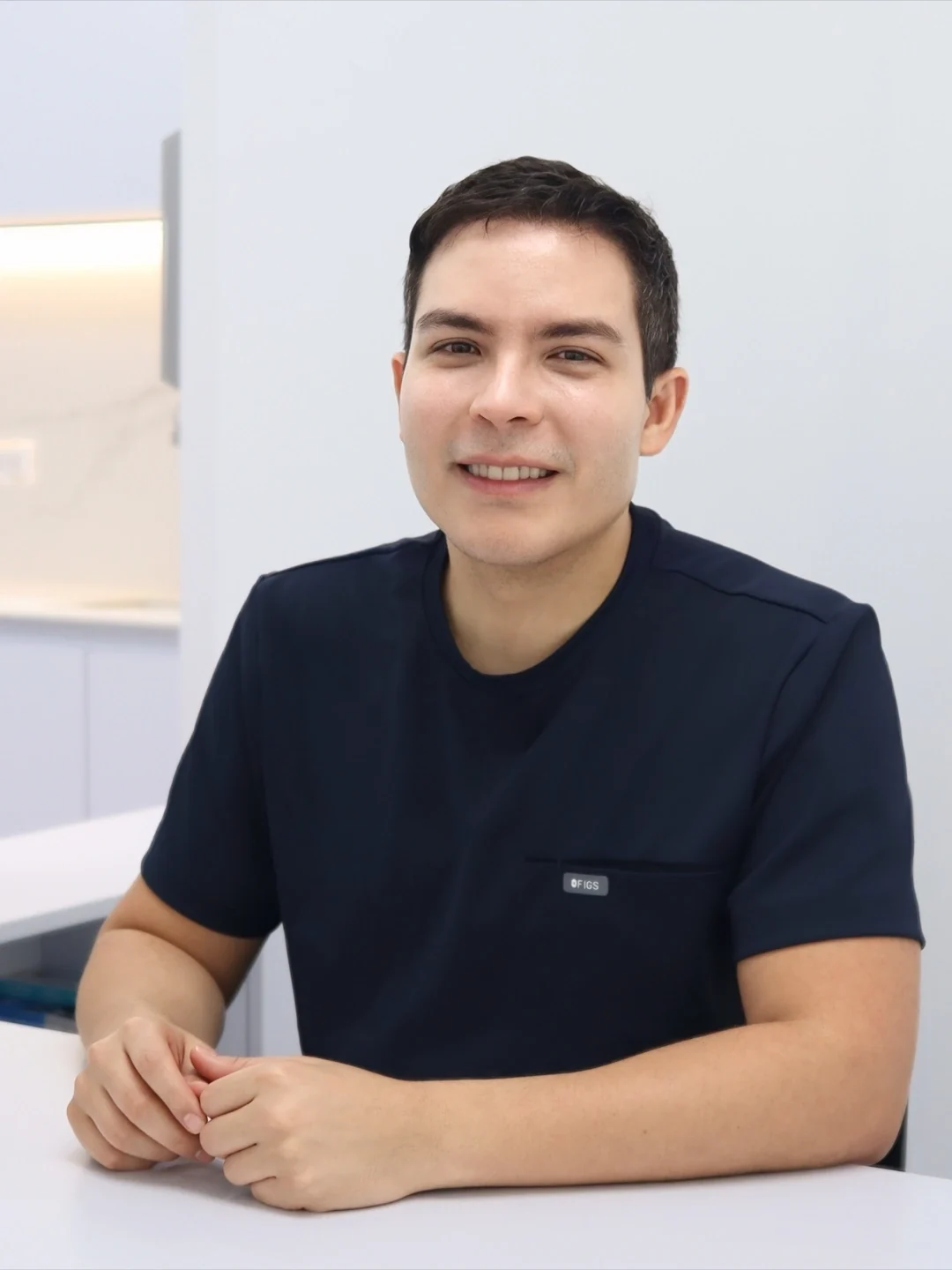
The specialist you need when something went wrong
Correcting a badly placed filler is not the same as placing one. It calls for a physician who can see what is under the skin. Dr. Jorge Vives is a radiologist and aesthetic physician: he reads ultrasound for a living and treats faces every day. That dual training lets him diagnose what others can only estimate, and correct it with hyaluronidase placed exactly where the product is.
- Universidad de Cartagena, Colombia
- Medical degree validated in Spain
- Speaker at international congresses
- Radiologist — member of the Asociación Colombiana de Radiología
- Member of the CMAC and AAAM expert committees
- International speaker for the Colombian Society of Radiology
- Trains physicians in ultrasound-guided injection technique
- Faculty: Ultrasound and Interventional Techniques in Facial Aesthetics
Where this procedure is performed
The same ultrasound-guided assessment wherever you are treated. Travel from abroad is coordinated in English, around the city that fits your trip.
Cartagena
The main practice, in Bocagrande. Full consultations, ultrasound assessment and correction procedures, including dissolving with hyaluronidase.
Booking · Online form or virtual consult
Bogotá
Dr. Vives travels on scheduled dates and sees patients at a partner clinic. Same assessment protocol; procedures are planned around the confirmed date.
Booking · Request the next available date
Medellín
Dr. Vives travels on scheduled dates and sees patients at a partner clinic. Same assessment protocol; procedures are planned around the confirmed date.
Booking · Request the next available date
Bogotá and Medellín are consultation days at partner clinics, not permanent offices — dates are confirmed before you travel.
Start with a virtual consultation- BOOK YOUR APPOINTMENT
Book your ultrasound assessment
The first step toward fixing a bad filler result is a diagnosis, not a procedure. Book an assessment with Dr. Vives — in Bocagrande, Cartagena, or online before you travel.

- FAQ
Frequently asked questions about filler correction
The questions patients ask most when a filler result goes wrong.
How do I know if my filler was placed badly or has migrated?
Common signs are visible asymmetry, lumps you can see or feel, a bluish tint under the skin (the Tyndall effect), product that has moved away from where it was injected, and pain or swelling that does not settle. In lips, migration often shows as a shadow above the lip line. An ultrasound scan shows exactly what is happening under the skin, so the plan is based on an image, not a guess.
Can a bad filler result actually be corrected?
In most cases, yes. Hyaluronic acid fillers can be dissolved with hyaluronidase, the enzyme that breaks the product down. When the filler is located with ultrasound first, the enzyme goes exactly where it is needed. Some cases need more than one session, and some are better handled by adjusting the result rather than removing all the product. The assessment defines which one is yours.
What is hyaluronidase and how does it dissolve filler?
Hyaluronidase is an enzyme that degrades hyaluronic acid. Injected into a filler deposit, it breaks the product down so the body can absorb it. It starts acting within hours and keeps working over the following days. It only works on hyaluronic acid fillers; other materials need different approaches.
Does dissolving filler hurt?
The procedure is usually well tolerated. A local anesthetic keeps you comfortable, and most patients describe mild pressure or a brief sting. The session itself is short.
How long does hyaluronidase take to work?
The first changes can be visible within hours. The full result usually settles in 24 to 72 hours, once the swelling goes down. A follow-up ultrasound then confirms whether the product dissolved completely or a second session is needed.
Can you correct fillers that are not hyaluronic acid?
Hyaluronidase only acts on hyaluronic acid. Materials such as calcium hydroxylapatite or PMMA cannot be dissolved with it and need different management, from monitoring to, in some cases, surgical removal. That is why the ultrasound assessment comes first: it identifies the material before any decision is made.
Why does ultrasound matter for filler correction?
Because dissolving blind means estimating where the product is. Ultrasound shows the exact deposit, its depth and the vessels around it, so the enzyme is placed precisely and the result can be verified on screen. It also reveals problems that change the plan, such as granulomas or fibrosis.
What are the risks of hyaluronidase?
The most common effects are temporary: swelling, bruising and tenderness in the treated area. Allergic reactions are rare but possible, so your medical history is reviewed before injecting. As with any injection, there is a small risk of infection. It is also possible to dissolve more product than intended; guiding the injection with ultrasound and confirming with a control scan keeps that risk low.
Who should not have hyaluronidase?
Hyaluronidase is not recommended during pregnancy or breastfeeding, with an active skin infection in the area, or with a known allergy to the enzyme. If you have a severe bee or wasp venom allergy, mention it at the assessment. Your medical history is reviewed before any correction is scheduled.
How much does a filler correction cost in Colombia?
The ultrasound assessment of previous filler starts at COP $500,000. The correction itself is priced at that assessment, because the cost depends on how much product there is, where it sits and how many sessions are needed. International patients can request the equivalent quote in US dollars before traveling.
Can I see Dr. Vives in Bogotá or Medellín?
Yes. Dr. Vives is based in Cartagena, where he sees patients on a regular weekly schedule at his practice in Bocagrande. He also travels to Bogotá and Medellín on scheduled dates each month and sees patients at a partner clinic in each city, following the same assessment protocol.
Filler correction is performed in all three cities. Dr. Vives travels with his own ultrasound equipment, which is what makes it possible to locate the existing product before applying hyaluronidase instead of dissolving blind.
Because Bogotá and Medellín are consultation days rather than permanent offices, dates are confirmed before you travel. Request the next available date through the form and we will confirm the city and the date with you. If you are traveling from abroad, you can also start with an online consultation before booking your trip.
- RELATED TREATMENTS
What comes after a correction
Once the product is dissolved and the tissue has recovered, many patients choose to redo the area — this time with ultrasound guidance from the start.
Non-surgical rhinoplasty
Nose reshaping with hyaluronic acid, the zone where ultrasound guidance matters most.
Lip enhancement
Natural lip volume with hyaluronic acid, planned with ultrasound.
Botox
The natural companion for expression lines.
Ultrasound-guided fillers
Filler placed with vessels mapped and planes measured, from the first session.